
Los Angeles Dumpster Street Permit Requirements & Costs
Southland Dumpster Rental helps Los Angeles customers understand Dumpster Street Permit Requirements & Costs before delivery. In Central City East, Downtown, and Chinatown, street placements may need city approval, especially near Los Angeles City Hall and busy residential blocks. With long dry seasons, 1950-1980 street layouts, and tight curb space, we help you avoid delays, confirm rules, and keep your rental compliant from the start.
Los Angeles Street Permit Requirements for Dumpster Placement
When we're setting up dumpsters across Los Angeles, street permits become critical for our larger container placements. These permits ensure we're complying with city regulations while giving our customers the most convenient waste removal possible. We've learned through years of experience that each neighborhood — from Studio City to Downtown — has unique requirements for street placement. Our crew always checks local guidelines first, making sure we obtain the necessary permissions and avoid potential fines or service interruptions.
Pre-Delivery Site Checklist
-
Verify local municipal regulations before dumpster placement
-
Contact Los Angeles Department of Public Works for specific street permit details
-
Understand neighborhood-specific restrictions in Studio City, Downtown, and Central City East
Dumpster Street Permit Requirements & Costs in Los Angeles Neighborhoods
In Los Angeles, placing dumpsters on public streets requires a permit from the Bureau of Street Services. Neighborhoods like Chinatown, Studio City, and Central City East enforce these permits to avoid traffic disruptions and ensure pedestrian safety. Permit fees vary depending on dumpster size and duration, influenced by local regulations near landmarks like the Hollywood Sign. For example, in Studio City, tighter residential street restrictions often lead to higher permit costs. Southland Dumpster Rental provides guidance on navigating these permits, helping clients comply efficiently with city rules.
Key Takeaway
Street permits for dumpsters vary by neighborhood; securing them ensures compliance and avoids fines in Los Angeles.
Dumpster Street Permit Requirements & Costs in Los Angeles, CA
Operating a dumpster on public streets in Los Angeles requires obtaining a street permit from the city. The permit ensures legal placement without obstructing traffic or violating local regulations. Permit requirements vary by neighborhood, with areas like Studio City, Central City East, and Downtown having specific rules due to traffic patterns and residential density. Costs for permits typically range from $150 to $450 per week depending on location, duration, and dumpster size. Additional fees may apply for placement near landmarks such as the Crypto.com Arena. Compliance with city codes prevents fines and operational delays. Coordination with Southland Dumpster Rental streamlines permit acquisition and ensures adherence to local street use policies.
| Specification | 10-Yard Dumpster | 20-Yard Dumpster | 30-Yard Dumpster | 40-Yard Dumpster |
|---|---|---|---|---|
| Neighborhood | Permit Required | Typical Cost Range | Placement Restrictions | Notes |
| Studio City | Yes | $200-$350/week | No placement within 15 feet of fire hydrants or bus stops | Residential street rules apply; permit must be displayed clearly |
| Central City East | Yes | $180-$300/week | No blocking of sidewalks or alley access | Permit must be applied for 7 days in advance |
| Downtown | Yes | $250-$450/week | Restrictions on placement near high-traffic zones and event venues | Crypto.com Arena proximity requires additional clearance |
| Permitting Authority | City of Los Angeles Bureau of Street Services | Contact phone: (747) 302-3578 | Processing time: 3-5 business days | Enforcement through parking citations if no permit |
| Permit Duration | 1 to 4 weeks | Extensions available up to 8 weeks | Renewal fees apply | Longer rentals increase total permit cost |
| Dumpster Sizes Allowed | 10 to 40 cubic yards | Larger dumpsters may require special permits | Weight limits enforced | Southland Dumpster Rental offers compliant options |
| Placement Rules | Must maintain 20 feet clearance for emergency vehicles | No obstruction of traffic lanes | Dumpster must be secured and covered | Compliance inspected by city officials |
| Permit Application Requirements | Completed application form | Proof of liability insurance | Site plan with dumpster location | Fee payment confirmation |
| Fees Breakdown | Permit application fee: $50-$100 | Weekly placement fee: $150-$350 | Extension fee: $100 per additional week | Penalty fees for violations up to $500 |
| Enforcement | Fines issued for unpermitted dumpsters | Immediate removal required for violations | Repeat offenses increase penalty amounts | Coordination with Los Angeles Parking Enforcement |
| Special Event Restrictions | Crypto.com Arena events restrict dumpster placement | Temporary no-parking zones may apply | Additional permits required for event days | Coordination with event management necessary |
| Insurance Requirements | General liability coverage minimum $1 million | Southland Dumpster Rental provides proof on request | Insurance must cover street placement risks | Required for permit approval |
| Operational Constraints | No dumpster placement during street cleaning hours | Noise restrictions enforced during residential hours | Dumpster must be removed promptly after permit expiration | Southland Dumpster Rental advises on optimal scheduling |
| Permit Renewal Process | Renewal application submitted 5 days before expiration | Fees recalculated based on duration | Inspection required for renewal approval | Delays may result in service interruptions |
Get Your Los Angeles Dumpster Permit Right the First Time
Avoid fines and delays with compliant street placement.
Los Angeles Dumpster Street Permit Requirements & Costs, Handled the Practical Way
We’ve spent enough years on Los Angeles streets to know that a dumpster permit isn’t paperwork for paperwork’s sake. It’s part of keeping a curbside placement legal, safe, and workable when the block is tight and the neighbors are parked three deep. In Chinatown, Studio City, and Central City East, we look at the street first, then the container, because the best setup is the one the truck can actually service without blocking traffic or creating trouble with the city.
-
Street permits before the dumpster lands
When we’re setting a roll-off on a public street in Los Angeles, we treat the permit as part of the job, not an afterthought. In Chinatown, Central City East, and around Studio City, curb space gets tight fast, and a blocked lane brings complaints just as fast. We plan for the city’s right-of-way rules because that keeps the placement clean and keeps the load moving without a surprise visit from enforcement.Real World ExampleWe’ve set dumpsters near older 1950s-to-1980s buildings where the alley was too narrow, so the only workable spot sat curbside. In those cases, we line up the paperwork first and stage the box where traffic, delivery access, and sightlines all still make sense.
-
Match the container to the street and the load
A permit problem often starts with the wrong box. A compact footprint helps on narrow residential streets, while heavier debris from demo work near post-war buildings needs a container that won’t overburden the site. We look at the block, the parking pattern, and the material before we place anything. That’s how we avoid extra handling and the shuffle that slows a job down.Real World ExampleNear Dodger Stadium event traffic or in a dense street like Central City East, we’ve had to favor tighter placement and smarter sizing. A 20-yard box might fit the street better than something bigger, even when the load looks simple on paper.
-
Right-of-way details matter as much as the dumpster
Street permits in Los Angeles usually hinge on the little things: distance from intersections, clearance for hydrants, visibility for drivers, and whether the container will sit in a metered or signed space. We’ve learned that crews who ignore those details lose time and rack up headaches. We don’t guess at placement because a bad spot can turn into a moving violation or an unsafe work zone.Real World ExampleOn a block in Studio City, we’ll walk the curb line, check the slope, and look for utility access before the truck ever backs in. That quick field check saves us from moving a full dumpster twice, which nobody wants.
-
Plan for traffic, not just disposal
Los Angeles streets don’t behave the same way all day. Morning delivery windows, school traffic, event crowds near Dodger Stadium, and evening parking pressure all change where we can safely place and retrieve a dumpster. We build the schedule around the street itself, because a permit only works when the truck can get in and out without boxing the block up. That’s the kind of detail that keeps the job moving.Real World ExampleDuring a downtown cleanup, we’ve pulled a container after lunch instead of waiting until late afternoon, just to avoid a packed curb lane. That’s the sort of practical call that keeps the street open and the worksite under control.
We show up, we haul it away, no fuss, and we do it with the street rules in mind from the start.
Street Permit Blunders That'll Cost You in LA
After 17 years hauling in LA, we've seen every permit mistake—here's how to avoid shutdowns in Downtown, Chinatown, and Central City East.
Assuming all neighborhoods have the same permit rules
The Consequence
The Fix
Not accounting for post-war building clearances
The Consequence
The Fix
Ignoring Chinatown's historic district overlay
The Consequence
The Fix
Using standard dumpsters near freeway ramps
The Consequence
The Fix
Skipping residential street notifications
The Consequence
The Fix
Los Angeles Street Permit Requirements for Dumpster Placement — Part 2
Navigating street permit requirements in Los Angeles isn't just bureaucratic paperwork — it's critical for avoiding costly fines and project delays. Every neighborhood from Downtown to Studio City has unique regulations that impact where and how you can place a dumpster. Our crew has worked these streets for years, and we understand the nuanced local guidelines that catch most contractors off guard.
Placement Feasibility Checklist
-
Verify specific street permit requirements with local municipal office
-
Obtain necessary documentation before dumpster delivery
-
Ensure clear visibility and safety triangles around dumpster placement
-
Mark designated zones with appropriate traffic signaling
| Neighborhood | Permit Complexity |
|---|---|
| Downtown | High |
| Chinatown | Medium |
| Studio City | Low |
Dumpster Street Permit Requirements & Costs in Los Angeles
Los Angeles street permits depend on curb space, block access, and local parking rules near Downtown, Chinatown, and Studio City.
When is a street permit needed for a dumpster in Los Angeles?
Who handles the permit for a dumpster on the street?
What affects permit cost for street placement?
Do older 1950s to 1980s neighborhoods have extra placement issues?
What happens if a dumpster blocks parking or traffic in Los Angeles?
Do residential streets in Downtown or Chinatown need different planning?
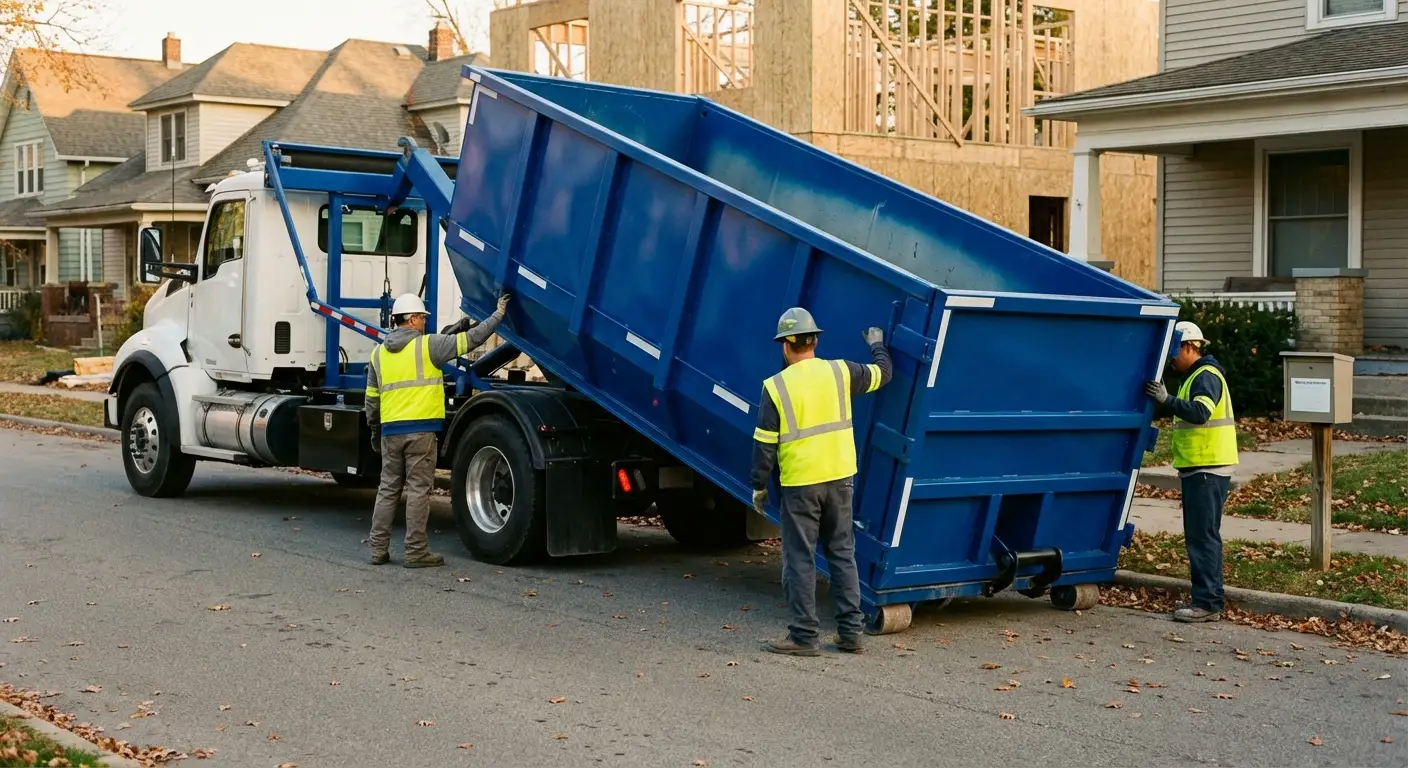
Dumpster Street Permit Requirements and Costs in Los Angeles
Obtain necessary street permits before placing dumpsters on public roads in Los Angeles to avoid penalties and ensure compliance.
Experienced Los Angeles dumpster rental with permit compliance support