
How to Protect Your Driveway During Dumpster Rental in Los Angeles
Los Angeles homeowners face unique challenges when renting dumpsters, especially in dense residential neighborhoods like Central City East and Downtown. Southland Dumpster Rental specializes in protecting your driveway from potential damage, using proven techniques tailored to the city's diverse residential landscape and post-war building infrastructure.
Practical ways we keep a driveway from getting chewed up
When we drop a bin in Los Angeles, the driveway often matters more than the haul itself. Between older concrete in Central City East, tighter access near Chinatown, and mixed-use streets in Studio City, we plan the placement before the truck ever backs in.
Put down plywood or boards before the container lands
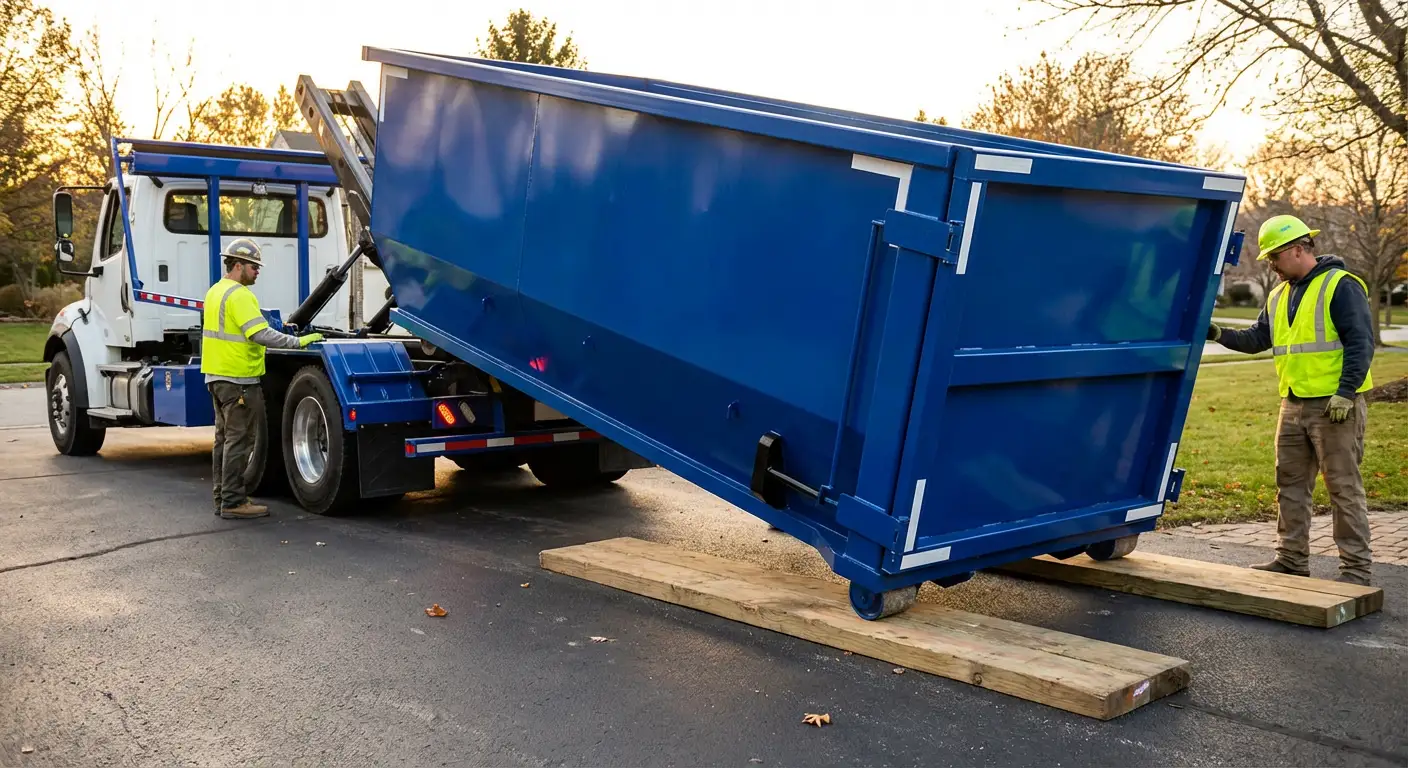
We like a solid layer under the dumpster because metal skids and truck outriggers don’t care how nice the concrete looks. On older post-war driveways, especially around 1950s and 1960s homes, we’ll stage plywood first so the weight spreads out instead of biting into one spot. If the surface has cracks, we bridge them and keep the container off the weakest edge.
Choose the smallest footprint that still fits the job
A tighter container helps when the driveway narrows or slopes, and that matters in neighborhoods where space already feels pinned down. We use a compact footprint setup when access is snug, because less side-to-side wiggle means less chance of scuffing curbs, planters, or decorative concrete. Pairing the right size with 10-yard dumpster service in Chinatown or 20-yard dumpster service in Studio City usually gives us enough room without crowding the driveway.

Keep the load balanced so the bin doesn’t drag
We tell folks to spread heavy debris across the floor instead of piling everything near one end. That keeps the roll-off stable when the truck picks it up and lowers the chance of the rear edge grinding across the driveway. For concrete, tile, or demo scraps, we’ll often set the bin with a concrete disposal option in Central City East and match it with high tonnage capacity so the bin stays planted instead of shifting under load.
Protect the driveway edges during drop-off and pickup
The worst damage usually happens at the lip where the truck tires, the dumpster rails, and the driveway edge all meet. We slow that part down, watch the angle, and use a spotter if the approach looks tight near a curb cut or alley. On jobs near downtown Los Angeles and around Chinatown residential streets, we also rely on commercial fleet access and a careful set from our dumpster features so the bin lands clean and leaves clean.
Have Concerns?
Speak directly with a dispatch pro about your specific driveway conditions.
Protecting Your Driveway During Dumpster Rental in Los Angeles
In Los Angeles neighborhoods like Studio City and Central City East, driveway protection starts with plywood sheets under the dumpster legs. Southland Dumpster Rental recommends compact footprint dumpsters for narrow driveways. Avoid asphalt damage by checking weight distribution with our weight guidelines. For older driveways in Downtown LA, use walk-in models to prevent scraping. The safety guide covers LACMA-area specific tips for hot weather concrete curing.
Use plywood under legs, check weight limits, select proper dumpster type.
Protect Your Los Angeles Driveway from Damage
Expert techniques to prevent surface cracking, staining, and structural harm during residential dumpster placement in urban neighborhoods.
Local professionals protecting concrete surfaces across Central City East neighborhoods
Common Causes of Driveway Damage During Dumpster Rentals
Identifying key causes of driveway damage during dumpster rental aids in prevention and ensures driveway integrity throughout the rental period.
| Cause | Risk Level | Description |
|---|---|---|
| Improper weight distribution | MODERATE | Unevenly loaded dumpsters concentrate weight, increasing driveway stress and risk of cracks or depressions. |
| Lack of protective padding | MODERATE | Absence of plywood or mats under dumpsters causes direct contact, damaging asphalt or concrete surfaces. |
| Repeated dumpster placement | MODERATE | Frequent dumpster placement in the same spot weakens driveway integrity, leading to surface wear and damage. |
| Improper dumpster size selection | MODERATE | Oversized dumpsters exert excessive pressure on driveways not designed for heavy loads, causing surface failure. |
| Ignoring driveway condition | NONE | Placing dumpsters on already damaged driveways risks worsening cracks, but damage may be minimal if monitored. |
Protect Driveways When Renting Dumpsters in Los Angeles
Use plywood sheets to prevent driveway damage under dumpster weight.
How We Protect Your Driveway During Dumpster Rental
We’ve handled plenty of driveway setups across Los Angeles, and the lesson stays the same: protect the surface first, then load the dumpster. We look at the concrete, the slope, the age of the driveway, and the access path before we set anything down. Our crew uses boards, careful placement, and slow truck movements because old residential slabs in places like Central City East, Downtown, and Chinatown don’t like sudden stress.
We’ll place the dumpster with care, use protective materials, and keep the load path off your driveway so the concrete stays protected.
-
Start with a clean, level landing spot
We protect driveways by giving the dumpster a stable bed before the first load ever hits it. On older concrete in Central City East, Downtown, and Chinatown, we’ve seen small cracks turn into chipping when a box lands crooked or drags on the surface. We place boards, check the slope, and make sure the truck sets the container down square. That little bit of setup keeps the weight off weak edges and helps the dumpster sit where it belongs.
On a 1950s driveway near Downtown, our crew set plywood first, then lowered a 20-yard box slowly so the rails didn’t scrape the apron.
-
Use plywood or lumber under every contact point
I’ve learned that concrete doesn’t forgive steel skids. We use thick plywood or straight lumber under the dumpster rails because it spreads the load and keeps the metal from grinding into the slab. That matters even more in Los Angeles where heat, old patchwork repairs, and freeway-era driveways often leave the surface brittle. We also watch for soft spots and settle the base before we leave, because a small dip today turns into a real repair bill later.
In Chinatown, we laid boards under the corners of a 30-yard dumpster so a patched driveway wouldn’t take the full point load.
-
Keep trucks and dumpsters off the same worn path
A lot of driveway damage happens from repeated movement, not just the first drop. We plan the path so the truck doesn’t back over the same weak line, and we keep the dumpster where the hauler can load it without dragging it across the slab. Narrow residential spots around Central City East and Downtown need that extra attention, especially when curb space is tight and the turnaround is awkward. We’d rather spend a few extra minutes lining it up than tear up someone’s entry.
Near Crypto.com Arena, we staged the container so the truck never had to pivot on the driveway itself, which kept the concrete clean and unscuffed.
-
Match the container size to the surface and the load
We don’t treat every driveway like it can handle the same setup. A 10-yard or 20-yard dumpster puts less strain on a residential slab than a larger box, and that matters on older Los Angeles concrete with hairline cracks or uneven joints. When the material gets heavy, we think about weight distribution before we think about convenience. That’s why we pair the dumpster size with the driveway condition and the debris type, because concrete, roofing, and mixed demo all behave differently.
For a narrow residential drive in Downtown, we chose a smaller container and kept the heavier debris low so the slab didn’t get overloaded.
Driveway Disasters We See Every Week (And Exactly How to Avoid Them)
After 17 years delivering dumpsters across LA’s historic neighborhoods, we’ve patched more driveway damage than we’d like to admit. Here’s what actually works.
Not using plywood under the dumpster
Heavy dumpsters can crack or leave permanent indentations in your driveway surface, especially during hot LA summers.
Place 3/4-inch plywood sheets under all support points before delivery.
Choosing oversized dumpsters for narrow driveways
Our drivers often see scraped walls or damaged landscaping when oversized units squeeze into tight spaces.
Measure clearance and opt for our compact dumpsters in Chinatown alleys.
Ignoring slope drainage patterns
Water pooling around the dumpster during rare LA rains leads to erosion under the weight.
Have us position the dumpster perpendicular to the slope’s drainage flow.
Loading debris unevenly
Lopsided weight distribution stresses driveway corners where concrete is thinnest.
Spread heavy materials evenly and use our 20-yard dumpster for balanced capacity.
Forgetting about tree roots
Those iconic palm trees in Downtown LA? Their surface roots crack under dumpster pressure.
Mark root zones with spray paint before our team arrives.
Common Driveway Protection Concerns in Los Angeles
Driveway damage risks increase without protection during dumpster rental across Los Angeles neighborhoods like Beverlywood, Cheviot Hills, and San Pedro.
Why does driveway protection matter in Beverlywood?
What surfaces are most at risk in Cheviot Hills?
How does San Pedro’s coastal soil affect driveway stability?
Can I place a dumpster directly on asphalt near the Hollywood Bowl?
What material works best for protecting driveways in Los Angeles?
Does Southland Dumpster Rental require protective measures?

Protect Driveways During Dumpster Rental in Los Angeles
Use plywood, boards, or driveway protection mats before placement. Southland Dumpster Rental serves Los Angeles, CA with practical delivery guidance for residential surfaces.
Serving Los Angeles, CA with driveway protection guidance and careful delivery.